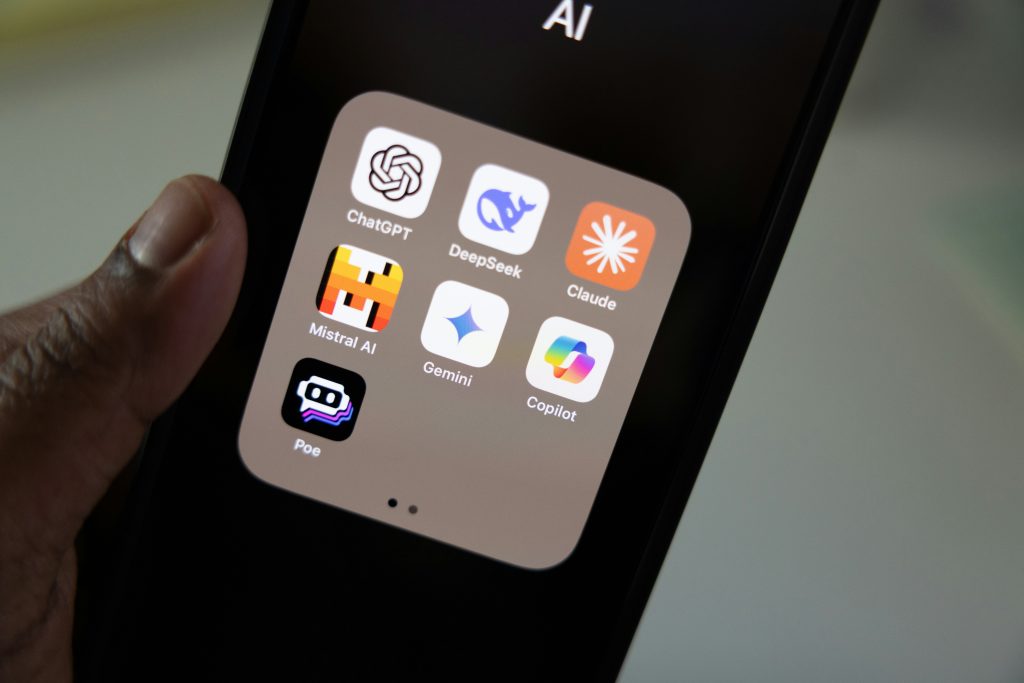
The browser has a Claude subscription checkout in one tab and an API billing console in another. Both involve payment, but they fund different activities. A search for “Virtual no KYC card for Claude: Developers Guide” can obscure that distinction by focusing on card signup before identifying the service being purchased. For developers, the first decision is whether the money buys an individual’s chat access or the model usage generated by an application.
If a developer needs chat access: Virtual no KYC card for Claude: Developers Guide starts here
A Claude chat subscription and direct API usage belong in separate budget lines. Paying for access to the chat application shouldn’t be treated as funding requests made with an API key. Likewise, a payment method saved in one billing environment shouldn’t be assumed to cover another.
For a developer purchasing an individual subscription, the relevant checks start with the subscription checkout and Anthropic’s current Help Center documentation. Claude subscription payment methods can depend on the purchase channel, so a browser purchase and an app-store purchase need separate consideration.
- Identify the product: Record the subscription name and the account that will own it.
- Identify the checkout: Establish whether Anthropic or an app store handles the purchase and renewal.
- Check card requirements: Review current guidance on supported payment methods, billing details, and regional availability.
- Check renewal behavior: Confirm the billing interval and how payment failures affect access.
An existing bank card is a sensible baseline when income already arrives in dollars. A different funding route needs a practical justification, such as separating project expenses or spending crypto receipts without first moving them into a bank account.
If a developer needs API access, verify the billing account before choosing a card
A chat subscription doesn’t replace API funding. The relevant starting point is the organization and billing configuration associated with the application’s API access.
For an API team, the useful outcome of a Virtual no KYC card for Claude: Developers Guide is a verified funding workflow, not simply an issued card. The developer responsible for deployment should identify who owns the billing organization, who can change payment settings, and which projects consume its budget.
Current Anthropic Console documentation should settle whether the account uses credit purchases, automatic replenishment, invoicing, or another available arrangement. Where replenishment is offered, its trigger and amount deserve separate review. An initial purchase and a later automatic charge aren’t the same operational test.
Claude API billing also needs to be distinguished from access through a cloud provider or another intermediary. In that arrangement, the provider’s billing system may determine payment requirements rather than Anthropic’s direct checkout.
A useful pre-deployment record contains the billing owner, purchase channel, funding mechanism, alert recipients, and escalation contact. This small administrative step prevents an application team from diagnosing a payment interruption as a model or infrastructure failure.
If a team is choosing a funding route: Virtual no KYC card for Claude: Developers Guide comparisons
The best fit follows the source of funds and the team’s approval process. A virtual card for AI subscriptions is useful when it solves an accounting or access-control problem; virtual issuance alone doesn’t make it preferable to an existing card.
| Developer profile | Best fit to evaluate | What to check |
| Individual paid in dollars | Existing bank card | Recurring charges and billing details |
| Employee buying approved tools | Business virtual card | Ownership, limits, and expense records |
| Freelancer paid in crypto | Crypto-funded virtual card | Funding costs and merchant eligibility |
| Production API team | Company-managed payment method | Replenishment and incident ownership |
A bank card avoids adding a separate crypto-loading step when funds already sit in a bank account. A business virtual card may offer centralized controls and reconciliation, but those features need confirmation with the issuer.
A crypto-funded card changes how money reaches the card balance. It doesn’t change the merchant’s payment requirements or establish that a particular Claude checkout will accept it.
For a production team, ownership can matter more than signup speed. A company shouldn’t depend on a departing contractor’s personal email account to recover its payment credentials or review transaction history.
If a freelancer holds crypto, check the loading mechanics before funding
Crypto-funded cards provide an intermediary step: cryptocurrency funds the card, and card details are then used at checkout. This is different from Claude accepting a blockchain transfer directly.
Alongside bank and business cards, WaldenPay’s crypto virtual card is one option for evaluating that workflow. Standard signup requires an email address without identity documents. Funding supports 135+ cryptocurrencies across 35+ networks, with cryptocurrency converted to card balance at loading time.
A Virtual no KYC card for Claude: Developers Guide should treat those as funding features, not evidence of Claude compatibility. Neither a card-network logo nor support for Apple Pay and Google Pay confirms that Anthropic will accept a particular card for the intended purchase.
Before sending funds, the freelancer should confirm issuer eligibility, the supported asset and network, the minimum load, and any available documentation about recurring online payments. The network selected in the sending wallet must match the destination instructions.
After funding, the important figure is the available card balance, not merely a completed blockchain transfer or money visible elsewhere in the provider account. Card credentials should remain in a password manager or approved payment system, never in source code or application configuration.
If a freelancer needs predictable costs, calculate the load before committing
The relevant comparison is the cost of creating and funding a usable balance, rather than the advertised signup cost. WaldenPay charges a $10 one-time card issue fee, has no monthly maintenance fee, and requires a minimum top-up of $25. Its top-up fee starts at 5%, with automatic volume discounts down to 3% based on rolling 30-day card spend.
Illustrative example: A developer consulting the no KYC card evaluation guide compares a $100 card load at the starting 5% fee: assuming that fee is paid on top of the loaded amount, the funding cost is $105, or $115 including the $10 first-card issue fee. A later $100 load at the same tier would cost $105 without another card issue charge, excluding any separate sending-wallet or blockchain costs.
Those amounts illustrate card funding, not Claude subscription prices or API usage charges. The provider’s loading screen should confirm the fee treatment and the resulting balance before the transaction is authorized.
Discounts shouldn’t drive unnecessary spending. The 4.75% tier begins at $2,000 in rolling 30-day card spend, while the 3% tier begins at $100,000. A small development project should budget against its actual tier rather than the lowest advertised percentage.
If a team values privacy, map the data rather than counting documents
The privacy test in Virtual no KYC card for Claude: Developers Guide is which parties receive which information. A card without verification at signup doesn’t make subsequent purchases anonymous.
An email-based card account still creates an account relationship. The provider can associate funding activity with that account, while public blockchains can expose transfer histories. Card payments generate transaction records, and Claude maintains its own account and billing information.
These records serve different purposes, but skipping an identity-document upload doesn’t erase them. A developer seeking to reduce document sharing should assess that specific benefit rather than assume the entire payment route becomes untraceable.
- Card account: Check recovery procedures, email security, and access to transaction records.
- Funding wallet: Consider what the sending address reveals through its public transaction history.
- Merchant account: Provide accurate billing information and review account access permissions.
- Company records: Retain receipts and ownership details without circulating complete card credentials.
For teams, a company-controlled email address with appropriate recovery arrangements is generally easier to govern than an individual’s personal inbox. Payment privacy also remains separate from application data handling: changing the card doesn’t change what prompts, uploaded files, or API requests the organization sends to an AI service.
If a subscription buyer sees a decline, investigate the failed step
A “Claude payment declined” message identifies an unsuccessful payment, not its cause. More funding won’t fix an unsupported card type, an incorrect billing address, or an authentication step that didn’t complete.
The practical response in Virtual no KYC card for Claude: Developers Guide is a troubleshooting sequence that separates merchant checkout behavior from issuer authorization.
- Capture the context: Record the time, purchase channel, amount, and displayed error without saving sensitive card details in shared tickets.
- Check available funds: Inspect the spendable card balance and pending authorizations, rather than relying on the original deposit amount.
- Verify the submitted details: Check the expiration date, security code, and issuer-required billing information.
- Review authentication: If checkout requests an additional verification step, establish whether it appeared and completed.
- Ask the relevant support team: The issuer can investigate authorization attempts; merchant support can clarify checkout or account restrictions.
Repeatedly submitting unchanged details can complicate diagnosis and may produce additional pending attempts. A controlled retry should follow a specific correction.
If the issuer sees no authorization attempt, attention should shift toward the checkout or payment channel. If it sees a decline, the available reason can guide the next step. Neither outcome justifies changing account information to misrepresent eligibility.
If an API team is going live, separate payment funding from usage controls
A funded card supports payment continuity. It isn’t an application-level spending control, and deliberately exhausting its balance is a poor way to manage a production service.
AI development budget management starts with understanding what generates usage. Agent loops, retries, large outputs, and concurrent jobs can all expand consumption beyond the initial test workload. A payment dashboard doesn’t know which customer request or background task justified that spending.
A card balance belongs in the funding plan; usage limits belong in the application and billing configuration.
The deployment checklist should include per-project budgets, request limits, bounded retries, output limits, and alerts routed to an accountable owner. Any provider-side budget or usage setting needs examination: an alert threshold and an enforced stop have different consequences. Teams should test what actually happens when their chosen limits are reached.
Operational monitoring should also distinguish payment failures from quota exhaustion, rate limiting, and application errors. Combining them under a generic “Claude unavailable” alert slows diagnosis and can encourage retries that worsen the incident.
Before launch, the team should document both paths: how spending is stopped when software misbehaves, and how funding is restored when a legitimate payment fails.
Virtual no KYC card for Claude: Developers Guide starts with billing requirements, not a card-network logo.